
International Guidelines for Blood Pressure: What is the right number?

Most people above the age of 30, when they visit their family doctor they get their blood pressure measured. Often the doctor tells them that it is on the ‘borderline’ and they should measure it again after a few weeks. However, it is quite common for the patient to feel safe, since the pressure is not ‘high’ and to forget all about it, thinking it will not cause any problem. This can be quite dangerous, since over a period of time even ‘borderline’ pressure can lead to heart disease or stroke.
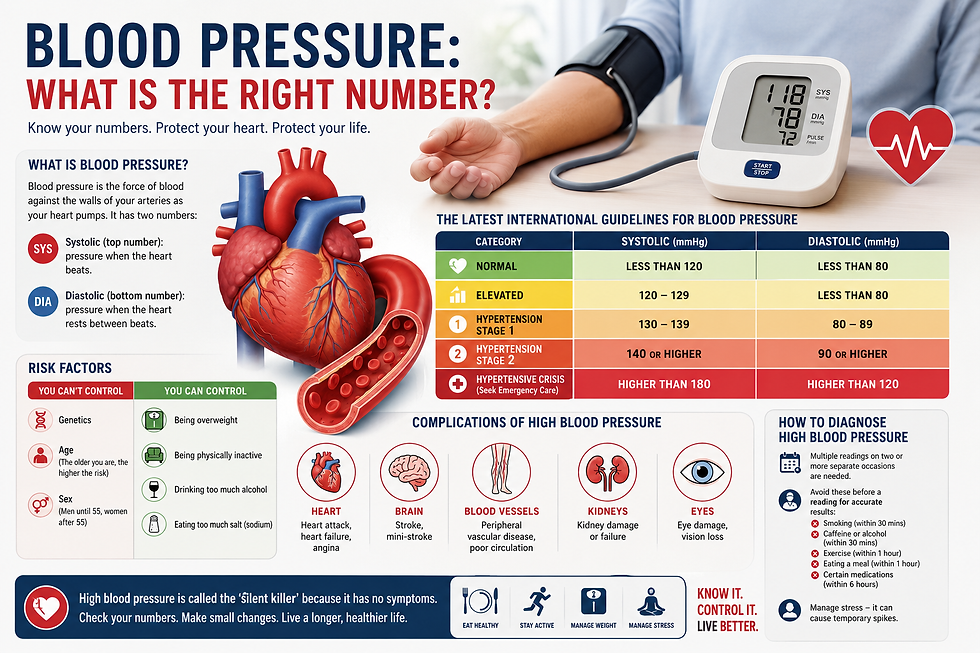
Years ago, ‘normal BP’ was said to be 100 plus your age. Studies have shown that that is too high. In the most recent international guidelines, a systolic reading of 120 or above is considered elevated, and anything at or above 130/80 is officially diagnosed as high blood pressure.
What is blood pressure? High blood pressure is called the ‘silent killer’ because it usually has no symptoms and causes no discomfort. You can have it and not even know it. People with high blood pressure have a much greater risk of having heart attacks and strokes.
Blood circulates through a network of arteries, veins, and capillaries to deliver food and oxygen to all the cells of the body. The heart provides the force to push the blood through this network of vessels. The force or pressure of the blood against the walls of the arteries is known as blood pressure.
The pressure of the blood against the walls of your arteries can increase because of several factors, including:
An increase in the amount of blood pumped through the blood vessels.
An increase in the resistance to blood flow. Resistance may result from narrowing of the blood vessels or stiffness in the walls of the blood vessels.
Causes of High Blood Pressure In over 90 percent of people with high blood pressure, the exact cause of their high blood pressure is unknown. There are a number of factors that increase your risk of developing high blood pressure. They include:
Risk Factors You Can't Control:
Genetics
Age: The older you are, the more likely you are to have high blood pressure.
Sex: Men have a greater risk than women until age 55. After 55, women have a higher risk.
Risk Factors You Can Control:
Being overweight
Being physically inactive
Drinking too much alcohol
Eating too much salt (sodium)
Systolic blood pressure (top or high number) is the pressure inside your arteries when the heart contracts and pumps blood into your arteries.
Diastolic blood pressure (bottom or low number) is the pressure inside your arteries when the heart is relaxing and filling with blood.
While both numbers are important, modern cardiology places a very strong emphasis on controlling your systolic pressure, as it is a major predictor of cardiovascular disease, especially in adults over 50.
The Latest International Guidelines for Blood Pressure:
Normal: Less than 120 (Systolic) AND Less than 80 (Diastolic)
Elevated: 120-129 (Systolic) AND Less than 80 (Diastolic)
Hypertension, Stage 1: 130-139 (Systolic) OR 80-89 (Diastolic)
Hypertension, Stage 2: 140 or higher (Systolic) OR 90 or higher (Diastolic)
Hypertensive Crisis (Seek Emergency Care): Higher than 180 (Systolic) AND/OR Higher than 120 (Diastolic)
Complications of High Blood Pressure The medical term for high blood pressure is hypertension. Over time, high blood pressure can damage your blood vessels and lead to serious health problems.
Atherosclerosis, angina, and heart attack: High blood pressure speeds up the development of atherosclerotic plaques that can clog arteries and cut off the blood flow to the heart muscle. Limited blood flow to the heart muscle can lead to angina (chest discomfort) or even a heart attack.
Stroke: Similar to a heart attack, a stroke is a ‘brain attack.’ Atherosclerotic plaque that builds up in the arteries of the head and neck can limit blood flow to parts of the brain. This is the most common cause of stroke. A stroke can also occur when high blood pressure causes weakened blood vessels in the brain to burst.
Peripheral vascular disease: Atherosclerotic plaque can also build up in the arteries of the legs. This may result in severe pain during physical activity, a condition called intermittent claudication.
Heart failure: High blood pressure makes it harder for the heart to pump blood through the blood vessels. Like any muscle that is overworked, the heart walls may become thickened and enlarged. An enlarged heart can’t pump normally, so blood backs up in the lungs and other organs. Congestive heart failure is the result, and it is an extremely serious condition.
Kidney damage: High blood pressure can damage the blood vessels in the kidneys.
Eye damage: High blood pressure can damage the blood vessels of the eyes. Blindness can result.
How to diagnose High Blood Pressure A single blood pressure reading that is high doesn’t necessarily mean you have high blood pressure. Because your blood pressure can change from time to time, several readings may need to be taken to get an accurate reading. If your blood pressure reading is high, you will need to have at least two readings taken on two or more separate occasions to confirm if you have high blood pressure.
To ensure your blood pressure readings are accurate, ideally you shouldn’t have your blood pressure taken if you have:
Smoked within 30 minutes of the reading
Drank caffeine or alcohol within 30 minutes
Engaged in moderate or vigorous physical activity within an hour
Eaten a meal within an hour
Taken an antihistamine or cold medicine within the past six hours
Stress can also cause blood pressure to increase temporarily. In fact, some people get nervous during a visit to their doctor’s office and this causes their blood pressure to increase. They are said to have ‘white coat’ or ‘office’ hypertension.
Author: Dr. Aashish Contractor is India's pioneer in cardiac rehabilitation and the Founding Medical Director of the Mumbai Marathon. With over 25 years of experience, he has guided hundreds of heart patients to run safely.


Comments